


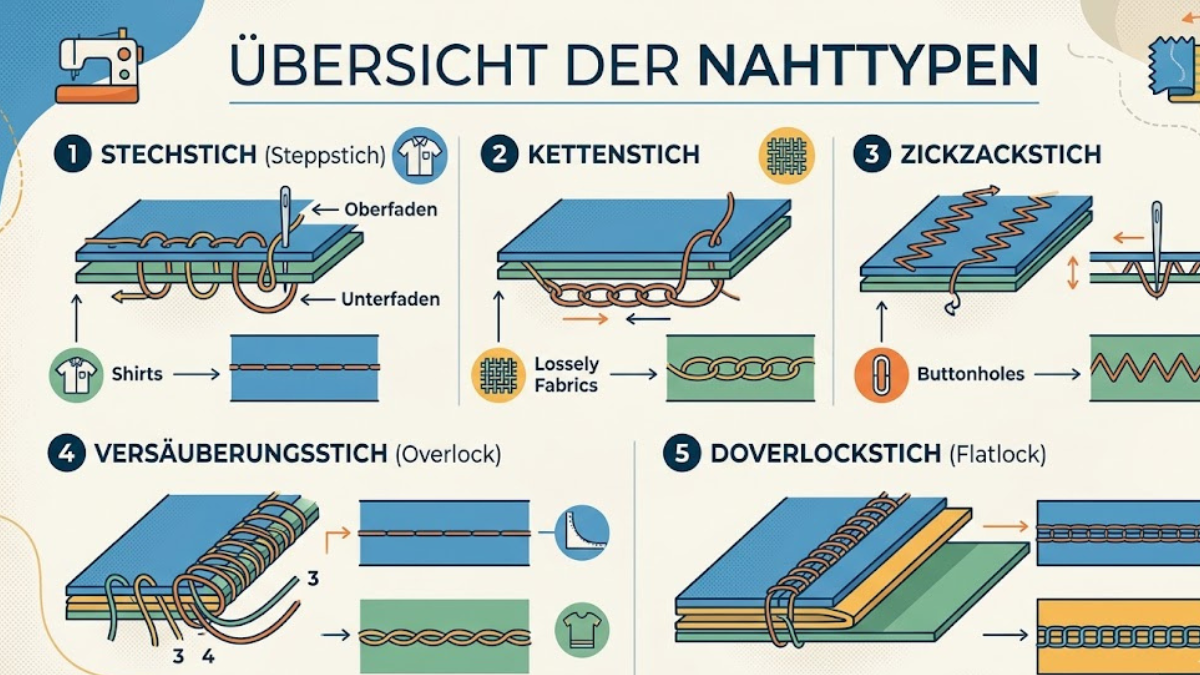
Understanding nahttypen is one of the most important steps in mastering sewing. Whether you’re working on clothing, upholstery, or industrial textiles, the type of seam you choose can affect durability, appearance, and comfort.
If you’ve ever wondered why some garments feel stronger, look cleaner, or last longer, the answer often lies in the seam construction. This guide breaks down everything you need to know about nahttypen, from basic options to advanced techniques, in a way that’s practical and easy to follow.
What Are Nahttypen?
In simple terms, nahttypen refers to different types of seams used to join fabric pieces together. Each seam serves a specific purpose depending on the fabric type, design, and function of the finished product.
Some seams are designed for strength, while others focus on aesthetics. For example, a seam used in jeans must handle stress and wear, while one in a silk dress prioritizes a smooth and clean finish.
Choosing the right seam is not just a technical decision. It directly impacts how your project looks, feels, and performs over time.
Why Nahttypen Matter in Sewing
When working on any sewing project, selecting the correct nahttypen can make a huge difference. A poorly chosen seam may lead to fraying, tearing, or discomfort.
Strong seams ensure durability, especially in garments that experience tension like pants or jackets. Decorative seams, on the other hand, enhance the visual appeal of clothing and home décor items.
A good understanding of seam types also helps improve efficiency. You’ll spend less time fixing mistakes and more time creating polished, professional results.
Basic Nahttypen Every Beginner Should Know
Plain Seam
The plain seam is the most common type among all nahttypen. It involves stitching two fabric pieces together along the edge.
This seam is easy to create and works well for most beginner projects. However, it may require finishing techniques like zigzag stitching to prevent fraying.
It’s commonly used in everyday garments such as shirts, skirts, and simple dresses.
French Seam
A French seam is perfect for lightweight and delicate fabrics. Unlike a plain seam, it encloses raw edges inside the seam itself.
This type of nahttypen gives a clean and elegant finish, making it ideal for sheer fabrics like chiffon or organza.
Although it takes slightly more time to construct, the final result is neat and durable.
Flat-Felled Seam
Flat-felled seams are known for their strength and durability. You’ll often find this seam in jeans and workwear.
This type of nahttypen encloses the raw edges and adds extra stitching for reinforcement. It also lies flat against the fabric, making it comfortable to wear.
It’s a great choice for garments that undergo heavy use.
Advanced Nahttypen for Professional Results
Bound Seam
A bound seam involves covering the raw edges with binding material. This adds both durability and a decorative touch.
This type of nahttypen is commonly used in jackets, unlined garments, and high-end clothing.
It’s especially useful when working with fabrics that fray easily.
Lapped Seam
Lapped seams are often used in leatherwork or heavy fabrics. Instead of joining edges, one piece overlaps the other.
This method creates a strong bond and is ideal for thick materials. It’s also used in decorative designs where visible stitching adds character.
Double-Stitched Seam
As the name suggests, this seam uses two rows of stitching. It adds extra strength and is commonly used in sportswear and outdoor clothing.
Among all nahttypen, this one is favored for its reliability and ability to handle stress.
Comparison Table of Common Nahttypen
| Seam Type | Strength Level | Best For | Appearance |
|---|---|---|---|
| Plain Seam | Medium | Everyday clothing | Simple |
| French Seam | Medium | Delicate fabrics | Clean & hidden |
| Flat-Felled Seam | High | Jeans, workwear | Structured |
| Bound Seam | Medium | Jackets, decorative pieces | Stylish |
| Lapped Seam | High | Leather, heavy fabrics | Visible & bold |
| Double-Stitched | Very High | Sportswear, outdoor gear | Reinforced |
Choosing the Right Nahttypen for Your Project
Selecting the best nahttypen depends on several factors. Fabric type is one of the most important considerations. Lightweight fabrics require delicate seams, while heavy materials need stronger construction.
Another factor is the purpose of the item. Clothing designed for daily wear needs durable seams, whereas decorative items may prioritize appearance.
It’s also important to think about your skill level. Some seams are more complex and require precision. Beginners should start with simple seams and gradually move to advanced techniques.
Common Mistakes When Using Nahttypen
Even experienced sewers can make mistakes when working with nahttypen. One common issue is choosing a seam that doesn’t match the fabric type.
For example, using a plain seam on a fabric that frays easily can lead to poor results. Another mistake is not finishing raw edges properly.
Incorrect stitching tension or uneven seam allowance can also affect the final outcome. Paying attention to detail can help avoid these problems.
Tips to Improve Your Seam Quality
Improving your skills with nahttypen takes practice and patience. Start by using high-quality thread and needles that match your fabric.
Always test your seam on a scrap piece before working on the actual project. This helps you adjust settings and avoid errors.
Keeping your sewing machine clean and well-maintained also ensures consistent results.
Related Keywords You Should Know
When learning about nahttypen, it’s helpful to explore related terms such as seam allowance, stitching techniques, fabric finishing, and garment construction.
Understanding these concepts will give you a broader perspective and improve your overall sewing skills.
Expert Quote on Seam Selection
“Choosing the right seam is just as important as selecting the right fabric. A well-made seam can elevate a simple design into a professional piece.”
This highlights how crucial nahttypen are in achieving high-quality results.
Practical Applications of Nahttypen
In real-world sewing, nahttypen are used across various industries. Fashion designers rely on them to create stylish garments.
In upholstery, strong seams ensure furniture durability. Industrial applications use specialized seams for safety and performance.
Even in DIY projects, selecting the right seam can make your work look polished and long-lasting.
How Fabric Types Influence Nahttypen
Fabric plays a major role in determining the best nahttypen for any sewing project. Lightweight fabrics like chiffon, silk, and voile require seams that are gentle and less bulky. In such cases, French seams or narrow rolled seams are often preferred because they hide raw edges and maintain a soft finish.
On the other hand, heavy fabrics like denim, canvas, or leather demand stronger seam constructions. Flat-felled seams or lapped seams work well here because they can handle stress without tearing. Ignoring fabric compatibility can lead to puckering, weak seams, or an uneven look.
Understanding how fabric behaves under stitching helps you select the most suitable seam. This knowledge ensures that your project not only looks good but also performs well over time.
Seam Finishing Techniques and Their Role
Seam finishing is closely related to nahttypen, as it enhances both durability and appearance. Even the strongest seam can fail if the edges are left unfinished, especially with fabrics that fray easily.
Common finishing techniques include zigzag stitching, overlocking, pinking shears, and binding. Each method complements different seam types and adds an extra layer of protection. For example, a plain seam can be upgraded significantly by finishing its edges properly.
These techniques also improve comfort. Rough or unfinished edges can irritate the skin, especially in garments worn daily. A well-finished seam feels smooth and professional.
Industrial Use of Nahttypen
In industrial settings, nahttypen are used with precision and consistency to ensure product quality. Factories rely on specialized machines to create strong and uniform seams at high speed.
Different industries have different requirements. For example, automotive upholstery uses heavy-duty seams, while sportswear manufacturing focuses on flexibility and stretch. Seam selection is often standardized to meet safety and durability standards.
Industrial sewing also introduces advanced seam types that are rarely used in home sewing. These include welded seams and ultrasonic seams, which do not use traditional stitching methods.
Decorative Uses of Nahttypen
While many people think of seams as purely functional, nahttypen can also be decorative. Visible seams with contrasting thread colors can add character and style to garments.
Topstitching is a popular decorative technique that enhances both design and strength. It is commonly seen in denim clothing and jackets. Similarly, bound seams can add a refined, high-end look to garments.
Creative use of seams allows designers to experiment with texture, color, and structure. This transforms simple pieces into unique fashion statements.
Tools and Equipment for Perfect Nahttypen
Creating high-quality nahttypen requires the right tools. A reliable sewing machine is essential, but other accessories also play a big role.
Sharp needles, quality thread, and proper presser feet help achieve clean and even stitches. For example, a walking foot is useful for thick fabrics, while a rolled hem foot works well for delicate materials.
Measuring tools and marking chalk ensure accuracy. Even small errors in alignment can affect the final seam quality. Investing in good tools can make a noticeable difference in your sewing results.
How to Practice and Master Nahttypen
Learning nahttypen takes time, but consistent practice makes a big difference. Start with simple seams and gradually move to more complex ones.
Using scrap fabric is a great way to experiment without risking your main project. Try different stitch lengths, tensions, and seam allowances to see how they affect the outcome.
It’s also helpful to analyze finished garments. Look at how seams are constructed in store-bought clothing. This can give you practical insights and inspiration.
Common Challenges and How to Overcome Them
Working with nahttypen can sometimes be challenging, especially for beginners. One common issue is fabric shifting أثناء stitching, which leads to uneven seams.
Using pins or clips can help keep fabric in place. Another challenge is puckering, often caused by incorrect tension or needle choice. Adjusting your machine settings usually solves this problem.
Patience is key. Mistakes are part of the learning process, and each one helps you improve your skills.
Sustainability and Nahttypen in Modern Sewing
Sustainability is becoming increasingly important in sewing, and nahttypen play a role in this trend. Strong and durable seams extend the life of garments, reducing waste.
Choosing the right seam can prevent the need for frequent repairs or replacements. This not only saves time but also supports environmentally friendly practices.
Many designers now focus on creating long-lasting products, and seam quality is a big part of that approach.
Conclusion
Mastering nahttypen is essential for anyone serious about sewing. From basic seams to advanced techniques, each type plays a unique role in construction and design.
By understanding when and how to use different seam types, you can significantly improve the quality of your projects. The right seam not only enhances durability but also adds a professional finish.
Take time to practice and experiment with various seams. Over time, you’ll develop the confidence to choose the best option for any project.
FAQ Section
What are nahttypen in sewing?
Nahttypen are different types of seams used to join fabric pieces together. Each type serves a specific purpose based on fabric and design needs.
Which nahttypen are best for beginners?
Beginners should start with simple options like plain seams. These are easy to learn and suitable for most basic projects.
Why are nahttypen important?
Nahttypen affect the strength, appearance, and durability of a finished product. Choosing the right seam ensures better results.
Can nahttypen improve garment durability?
Yes, using strong seam types like flat-felled or double-stitched seams can significantly increase durability.
How do I choose the right nahttypen?
Consider fabric type, project purpose, and skill level. Testing seams on scrap fabric can also help you decide.
Are decorative nahttypen useful?
Decorative seams not only enhance appearance but can also add structure and uniqueness to your designs.
